Cashew Processing Machines,
Built Into Complete Plants.
From a single shelling machine to a full turnkey facility — CASHEW TECH engineers cashew processing equipment, designs and builds the plant around it, packages the finished kernel, and keeps it all running after commissioning. Guided by Cashew Techie, 10+ years turning cashew processing plants from blueprint to full production.
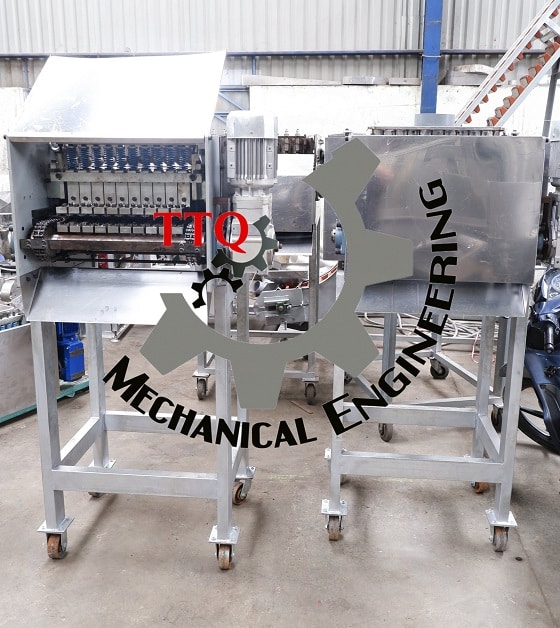
Machinery
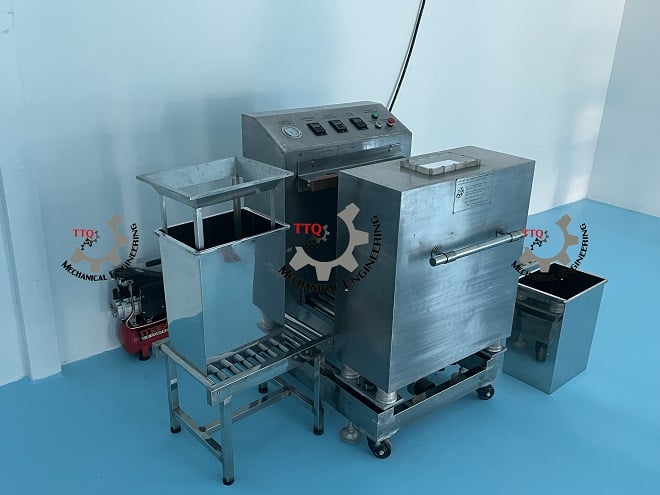
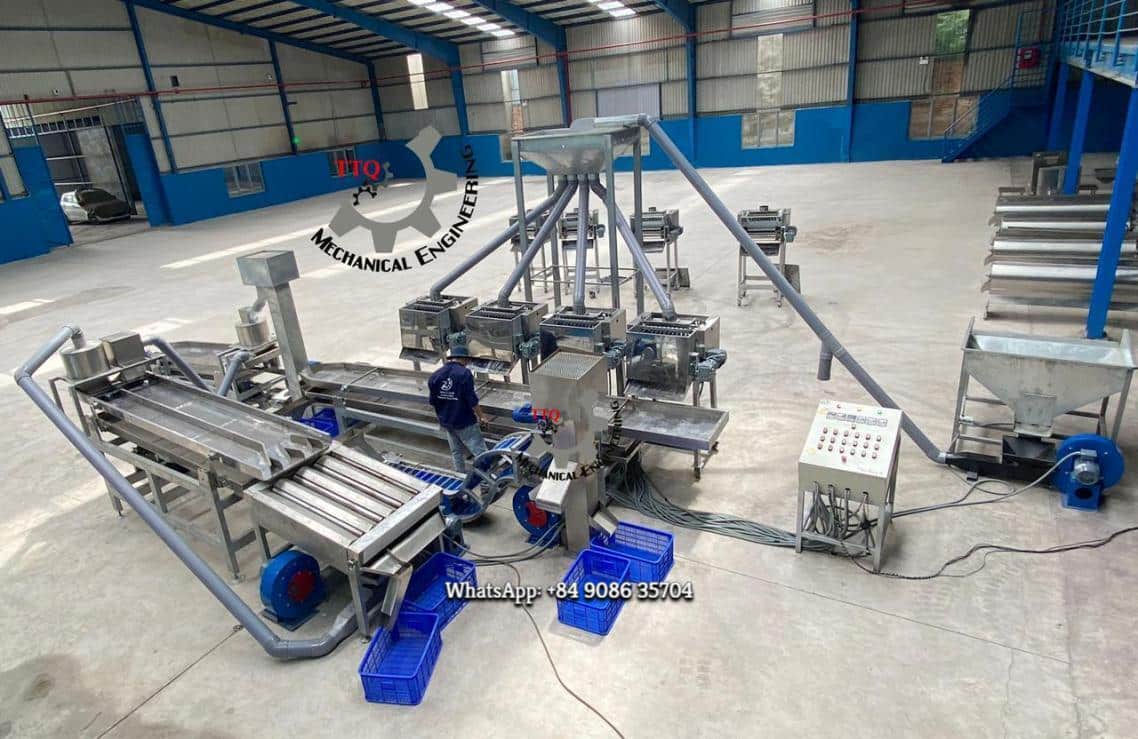
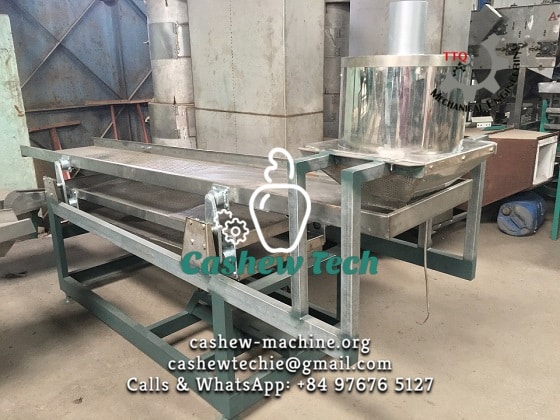
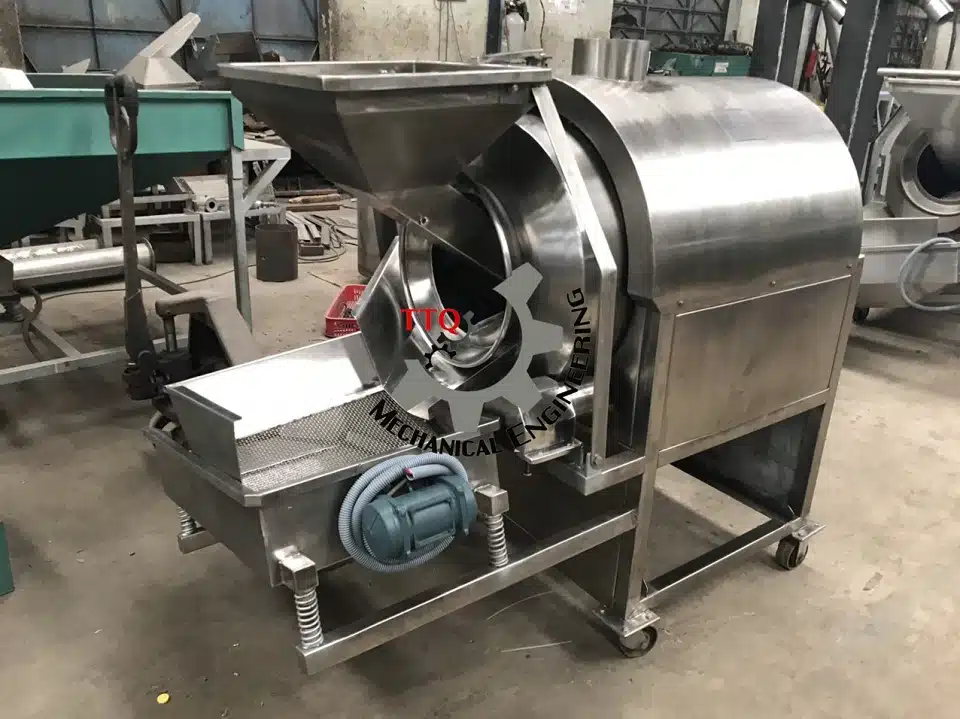
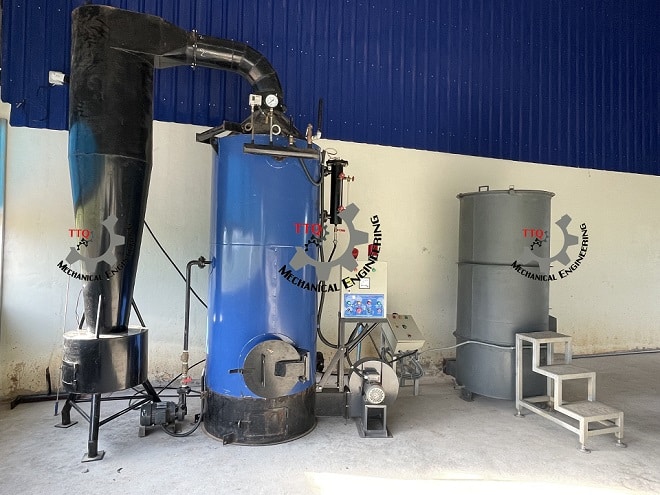
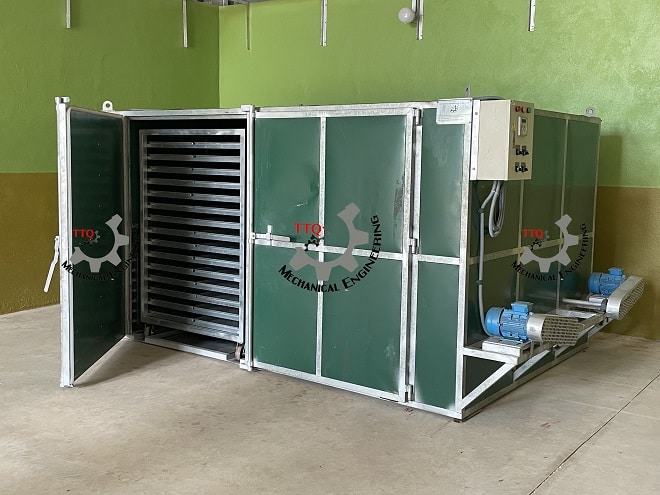
CASHEW TECH engineers the full processing line: cutting and shelling machines that separate kernel from shell with minimal breakage, steaming and cooking systems that prepare raw nuts ahead of shelling, dryers and humidification chambers that bring moisture into the range grading requires, peeling equipment that removes the testa without damaging the kernel underneath, color-sorting and grading lines that sort to standard kernel and piece grades, and roasting and packing equipment for the finished product. Machines are available individually or as a complete, integrated line sized to a plant's target capacity.
Browse the catalog →Turnkey Plant Design & Civil Construction
Buying the right machines solves only part of building a processing plant — the building itself, its layout, floor loading, ventilation, and utility routing all shape whether that equipment actually performs at its rated capacity once installed. CASHEW TECH's turnkey service covers factory design and civil construction alongside the machinery, so a new or expanding plant gets engineered as one system rather than equipment dropped into a structure designed around something else.
See what's included →Packaging Solutions
The right packaging format depends on a plant's output volume and where the finished kernels are headed — a shipment bound for bulk export has different requirements than retail-ready pouches for a domestic market. CASHEW TECH supplies bag, carton, and vacuum-pack lines sized to actual production volume and export destination, so packaging capacity doesn't become the bottleneck in an otherwise well-designed line.
Packaging options →Spare Parts, Maintenance & After-Sales
A plant's real operating cost is determined as much by what happens after commissioning as by the initial equipment purchase — unplanned downtime waiting on a part, or a maintenance gap that shortens a machine's working life, both erode the returns a well-chosen line should deliver. CASHEW TECH's after-sales service covers spare parts supply and maintenance contracts structured around a plant's actual duty cycle, not a generic schedule.
Service & support →Plant Audit & Assessment
A structured, whole-line diagnostic across five specific areas: line balance, kernel recovery, moisture control, energy use, and safety — carried out on an already-running operation, regardless of which vendor's equipment is installed. Most plants have only ever had a vendor's own service visit, scoped narrowly around that vendor's own machine; this audit looks at the whole line, because that's where most of a plant's recoverable losses actually hide.
Plant audit checklist →Equipment Buyer's Guide & Vendor Evaluation
A worksheet-based framework — not a vendor ranking — for defining real capacity and budget requirements before talking to any vendor, then evaluating every quote that comes back against the same consistent checklist. Covers the questions worth asking any vendor, an inspection checklist for shelling, peeling, and grading lines, common red flags in vendor quotes, and a post-purchase commissioning checklist.
Buyer's Guide →Vendor Evaluation →Ask Cashew Techie
Real questions from equipment buyers, processors, and cooperatives, answered directly with the reasoning written out rather than deflected into a quote form. New questions get added as they come in, covering everything from kernel damage during shelling to the labor-cost threshold where mechanization starts to pay for itself.
Ask Cashew Techie →See our machines in action
Cashew processing involves more than machinery: grading standards, import compliance, certifications, and market data all shape a plant's real economics. This site covers all of it, sourced against the actual standards and institutions rather than paraphrased secondhand.
sourced and citable
Cashew Processing Glossary
Definition-first entries for the terms used throughout this site and the industry: CNSL, testa, borma dryer, kernel recovery rate, W180–W500 grading, and more.
ISO/UNECE Grading Standards Explained
What ISO 6477 and UNECE DDP-17 actually specify, and how the W180–W500 and piece-grade system most buyers use in conversation maps back to them.
EU Import Compliance: Aflatoxin & Pesticide Limits
The exact figures under EU Regulation 2023/915 and 396/2005, and what they mean for a shipment headed to Europe.
Facility Certifications Compared
BRCGS, IFS, ISO 22000, and FSSC 22000 side by side, for a processor deciding which certification to pursue first.
Cashew Trade Data & Price Benchmarks
Where to find real production, trade, and price data — FAOSTAT, UN Comtrade, ITC Trade Map — rather than relying on secondhand figures.
AI & Computer Vision in Cashew Sorting
What optical sorting technology actually does, and the economics of when it pays for itself against a labor-cost baseline.
CNSL Industrial Applications Guide
The chemistry and market behind cashew nut shell liquid, a by-product stream worth understanding even for a processor not currently capturing it.
EUDR & Deforestation-Free Sourcing
Whether the EU Deforestation Regulation actually applies to cashew (it doesn't, directly) and why it's coming up in buyer conversations anyway.
CASHEW TECH plants and machinery operate across major cashew-producing regions — spanning both raw-material-origin markets, where the conversation is mostly about primary processing economics and mechanization thresholds, and established processing hubs, where it's more often about incremental efficiency gains on an already-mature line. Current and past work spans that full range of plant scales, from a first mechanization step for a smaller cooperative to a fully automated line for a large-scale exporter.
What is a cashew processing machine?
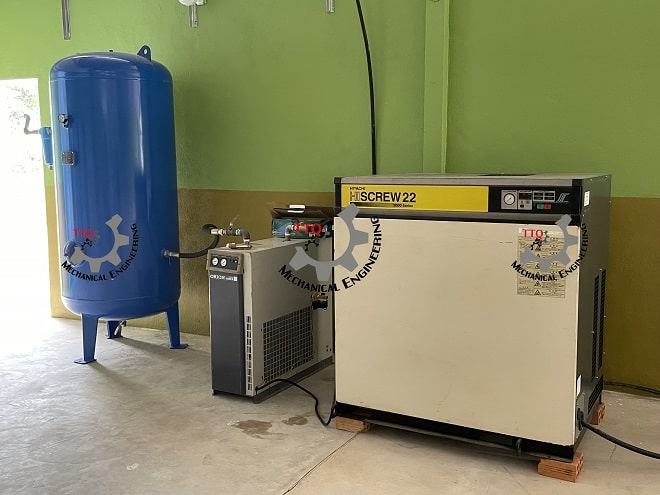
A cashew processing machine is any piece of equipment used to convert raw cashew nuts (RCN) into edible kernels — covering distinct stages including steaming or cooking to soften the shell, shelling or cutting to separate kernel from shell, drying, peeling to remove the testa (skin), grading by size and color, and roasting or packing for final sale. In practice, "cashew processing machine" gets used both narrowly, for a single-stage machine like a sheller, and broadly, for a complete multi-stage processing line — the correct scope depends on whether a buyer needs one machine or a full plant.
What does a full cashew processing plant include, beyond the machines?
A complete cashew processing plant includes the equipment itself, but also the civil works the equipment sits inside (floor loading, ventilation, utility routing), the installation and commissioning process, and — depending on scope — packaging lines for the finished kernel and a service arrangement for maintenance once production starts. Buying machinery without planning for these adjacent pieces is one of the most common causes of delay between signing a contract and reaching full production; see the Equipment Buyer's Guide for the fuller framework.
How much does a cashew processing plant cost?
Cost depends heavily on two variables: capacity tier (a 500-kg-per-day semi-mechanized line costs a small fraction of a 100-ton-per-day fully automated plant) and scope (machinery alone versus a full turnkey build including civil construction). Rather than quote a single number that would be misleading across that range, the Equipment Buyer's Guide walks through how to define capacity and budget requirements before requesting a quote, and the Vendor Evaluation Framework gives a structured way to compare quotes once they're in hand.
What capacity range does CASHEW TECH build for?
CASHEW TECH builds across a 500 kg to 100 tons-per-day range, from a single semi-mechanized line suited to a smaller cooperative or first-time processor, up to a fully automated turnkey plant for a large-scale exporter. Where a specific operation falls in that range depends on local labor cost, available capital, and target export markets — a decision covered in more depth in Ask Cashew Techie and the Small-Scale & Appropriate Technology guide.
Does CASHEW TECH handle plant construction, not just machinery?
Yes — turnkey plant design and civil construction is one of CASHEW TECH's four core service lines, alongside machinery, packaging, and after-sales support. That covers factory layout and engineering design, the civil works themselves, and installation, not just the equipment that goes inside an already-built structure. See the Turnkey Plant Design & Civil Construction page for what that process actually involves.
What's the difference between semi-automatic and fully automatic cashew processing lines?
A semi-automatic line relies on manual labor for some stages — typically peeling and final grading — with machines handling the more physically demanding or precision-dependent steps like shelling and drying; a fully automatic line mechanizes nearly every stage, including optical color sorting. Which is the better choice is primarily an economic question tied to local labor cost, not a simple "more automation is always better" answer — covered in detail in the Small-Scale & Appropriate Technology guide.
Does CASHEW TECH provide packaging alongside the machinery?
Yes — packaging is a dedicated service line, covering bags, cartons, and vacuum-pack lines sized to a plant's actual output volume and its export destination's requirements. See the Packaging Solutions page for the formats and materials available.
What happens after the plant is commissioned?
Commissioning is the start of a plant's operating life, not the end of CASHEW TECH's involvement — spare parts supply and maintenance service contracts are available to keep a line running at its rated capacity over time, which matters because unplanned downtime waiting on a part is one of the most common and avoidable causes of lost production. See the Spare Parts, Maintenance & After-Sales page and the Machine Lifespan & Depreciation Benchmarks for what to expect from major components over their working life.
How long does it take to build a cashew processing plant?
Timeline depends on capacity tier and scope, but the most common cause of delay isn't manufacturing time — it's site readiness (power, foundation work, civil construction sequencing), import and customs clearance for the equipment, and having trained operators available for commissioning. A realistic project timeline should build in contingency around those factors specifically rather than taking an optimistic proposal timeline at face value — discussed further in Ask Cashew Techie.
Tell us your capacity.
We'll recommend the line.
Share your daily raw cashew volume and target grade, and we'll come back with the right CASHEW TECH configuration — factory-direct pricing included.
Request a Quote →